

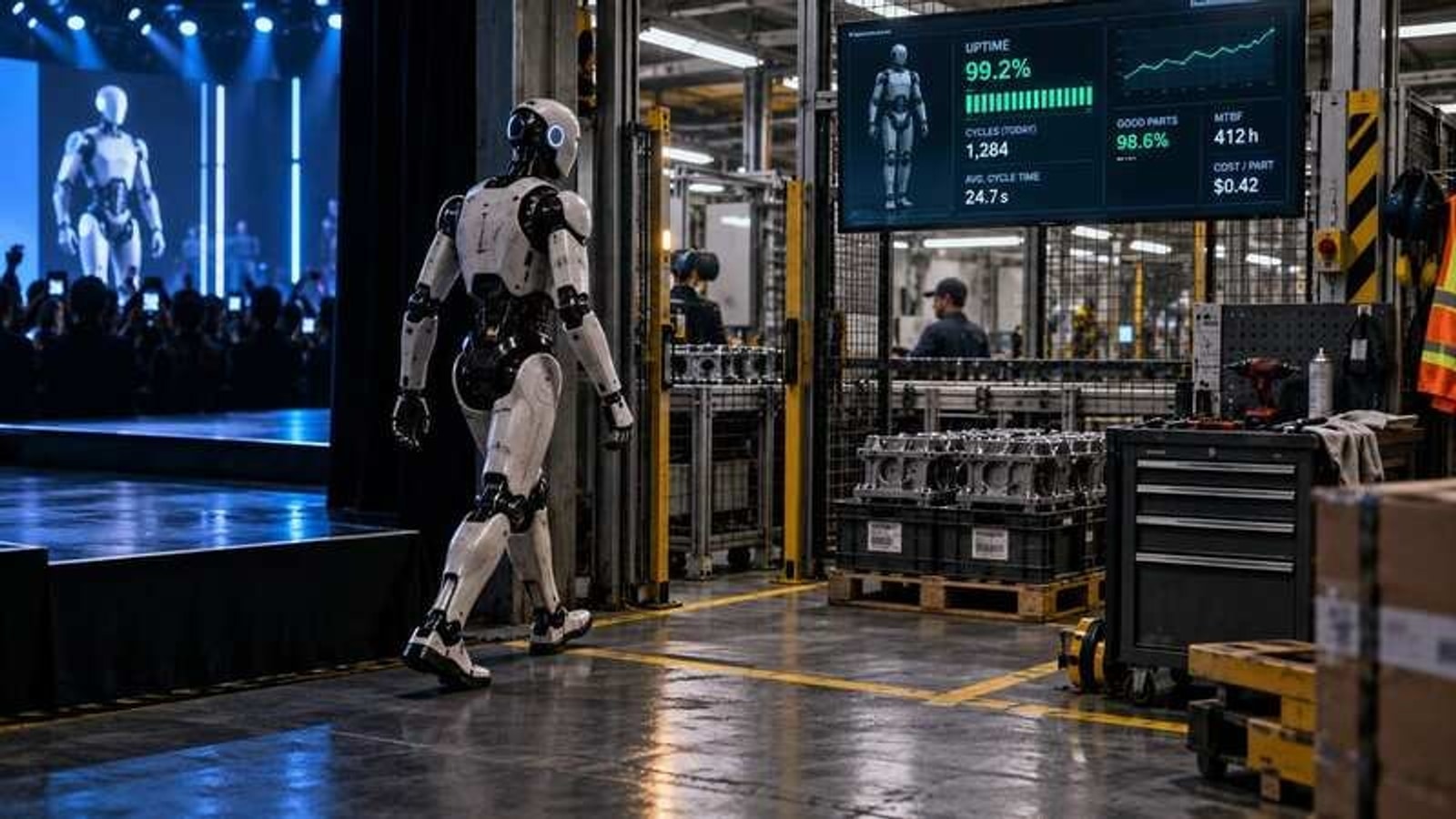
Humanoid robotics has spent the last few years winning the easiest part of a new technology cycle: attention.
The machines run, kick, dance, recover from falls, box, carry objects and make extremely effective videos. Investors notice. Governments notice. Manufacturers notice. The harder stage arrives when someone asks the question every industrial technology eventually has to answer: what does this machine do often enough, reliably enough and cheaply enough that a customer pays again?
That question moved closer to center stage on Sep. 9. Reuters, citing The Information, reported that Chinese regulators are tightening scrutiny of humanoid-robotics companies seeking public listings after Unitree Robotics' highly volatile market debut. The reported guidance asks applicants to show stronger evidence of recurring revenue, reduced losses or meaningful technological innovation.
The wording matters. This is not a ban on humanoid IPOs. It is a reported attempt to distinguish a strategically important technology sector from a capital-market popularity contest.
Unitree proved that demand for the story is real.
Unitree is not a shell built around a render. Shanghai Stock Exchange material tied to the company's prospectus shows a business that grew rapidly, reached roughly 1.7 billion yuan in 2025 revenue and shipped more than 5,500 humanoid robots that year. The company planned billions of yuan in new capital for model research, robot-body development, new products and manufacturing capacity.
Those are not trivial numbers. They are also not the same thing as proving that humanoids have found a mature industrial labor market.
Shipping thousands of robots demonstrates manufacturing and demand. It does not tell us how many units are operating twenty hours a day in factories, how many require constant engineering support, how long they run between failures, how many customers reorder, or whether the economics work after maintenance, integration and supervision are counted.
The benchmark is shifting from capability to utilization.
Early robotics markets reward technical milestones because the baseline is so low. A machine that can walk reliably is interesting. A machine that can recover from a shove is interesting. A machine that can perform coordinated manipulation outside a lab is interesting.
Industrial buyers eventually become less sentimental. They care about uptime, cycle time, mean time to repair, integration cost, safety boundaries, spare-parts availability, training burden and how many human hours are actually removed from the process.
That shift is healthy because it forces the industry to publish different numbers. Peak running speed is useful engineering data. So is the percentage of a shift completed without intervention. A viral boxing clip can reveal balance and contact-control behavior. A three-month deployment log reveals whether the machine belongs in an operating budget.
Public markets are unforgiving test equipment.
Private technology markets can carry a story for a long time because valuation is negotiated among a smaller group of investors. Public markets expose the company to continuous repricing, short-term traders, retail enthusiasm, earnings expectations and the unpleasant habit of comparing promises with reported numbers every quarter.
Unitree's volatile debut does not prove humanoids are overvalued as a category. It proves that excitement and commercialization can move at different speeds. That gap is exactly where regulators, investors and customers will begin asking harder questions.
China's advantage may make the test arrive faster.
China's humanoid sector has one structural advantage that makes commercialization pressure especially useful: scale. Dense supply chains, component production, contract manufacturing, engineering labor and domestic demand can put more machines into the world faster.
That creates a larger real-world dataset. It also exposes weak applications sooner. A technology can hide behind scarcity while only a few research units exist. Once thousands are available, the excuse changes. If the machine is not doing useful work, lack of hardware is no longer the explanation.
The next competitive advantage may therefore come from boring metrics: which company can deploy fastest, integrate with existing operations, keep robots working, repair them cheaply, improve software from fleet data and convert one pilot into ten more purchases.
Humanoid robotics is not entering a less important phase. It is entering a more honest one. The technical race still matters, but the scoreboard is expanding from demonstrations and shipment counts to recurring revenue, utilization, reliability and repeat deployments. If regulators and investors demand that evidence, the sector gets harder to hype and easier to measure.