

Spacecraft are launched with budgets inside budgets. There is a mass budget, a power budget, a thermal budget, a data budget and, for anything that has to maneuver after launch, a propellant budget. Engineers make those budgets pessimistic on purpose because the universe does not accept a purchase order for emergency fuel after the vehicle is a million miles away.
NASA's Nancy Grace Roman Space Telescope has just demonstrated what happens when several conservative assumptions break in the favorable direction at once.
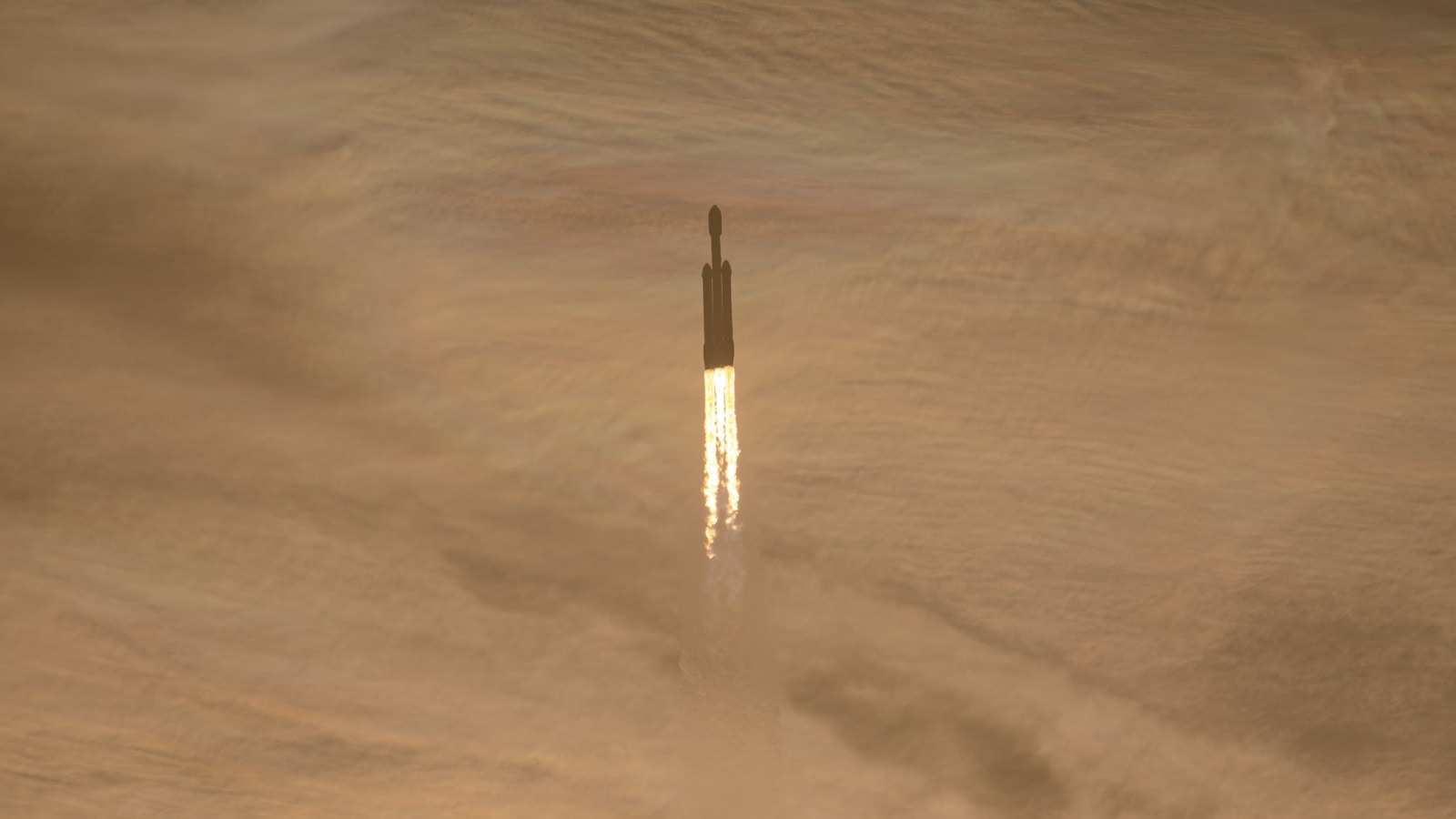
Roman launched Aug. 30 aboard a Falcon Heavy and is traveling toward a halo orbit around the Sun-Earth L2 region, roughly a million miles from Earth. The observatory was designed around a five-year primary mission plus a possible five-year extension. In other words, the baseline propellant plan was built to support about ten years of operations.
NASA now says Roman has fuel for at least 22 years of potential science operations.
That headline is legitimately impressive, but it needs one word in permanent boldface: potential. Propellant life is not the same thing as observatory life. A telescope is a chain of subsystems, and the mission ends when one sufficiently important link can no longer do its job or when the institution operating it stops paying for the work. What Roman has gained is not a guaranteed second decade. It has gained the option to attempt one.
The first four years were hiding inside one burn
Roman's first major post-launch trajectory correction occurred Aug. 31. NASA had allocated 441 pounds, or 200 kilograms, of propellant to the maneuver. The actual burn used about 40 pounds, or 18 kilograms, and NASA reports that it achieved more than 99 percent of the intended correction.
That is not a ten-percent improvement. It is a burn that consumed less than one tenth of the allocated propellant. NASA estimates the resulting savings are worth roughly four additional years of potential mission life.
The reason a short burn can be translated into years is that propellant after arrival at L2 is consumed slowly. Roman does not need to keep itself hovering against gravity like a helicopter. L2 is a dynamical region where the gravitational relationship between the Sun and Earth makes it useful for observatories, though a spacecraft still needs periodic corrections to remain in its intended orbit. NASA expects Roman to perform station-keeping burns roughly every 28 days.
Every kilogram not spent fixing the interplanetary trajectory therefore remains available for years of small maintenance maneuvers later.
This is why launch and navigation accuracy have consequences far beyond the first days of a mission. A launch vehicle that inserts a spacecraft closer to the intended departure conditions reduces the cleanup work the spacecraft must perform with its own finite propellant. A precise correction burn reduces the size of the next correction. Good performance compounds.
The next four years were sitting in the mass margin
The second source of lifetime came from a quieter number: Roman was lighter than the conservative mass used for propellant planning.
NASA says the propellant budget assumed a maximum observatory mass of 21,605 pounds, or 9,800 kilograms. Roman's actual mass was 17,760 pounds, or 8,056 kilograms. That is a difference of 3,845 pounds, or 1,744 kilograms, between the planning ceiling and the vehicle that actually flew.
A lighter spacecraft requires less impulse to achieve the same change in velocity. It also gave the team enough mass margin to fill Roman's propellant tanks to capacity rather than loading only the amount necessary for the ten-year requirement. NASA estimates that extra loaded propellant could support roughly four additional years.
This is an excellent example of why conservative engineering can look wasteful until the day it becomes optional capability. A mass ceiling is not a prediction that the spacecraft will weigh exactly that much. It is a design boundary. Propulsion engineers have to ensure the mission still closes if the observatory grows during development, because spacecraft have an ancient habit of getting heavier as instruments, shielding, harnesses, structural reinforcement and late fixes become real hardware.
If the final vehicle comes in lighter, the unused margin does not disappear. In this case, it became both lower maneuver cost and room for more propellant.
Another four years may come from the corrections Roman no longer needs
NASA expects additional savings from the second mid-course correction and the final insertion into Roman's L2 orbit. Because the first burn landed so close to target, the second correction can be smaller and later than originally planned. The agency currently projects that those maneuvers together could preserve enough additional propellant for roughly another four years.
Add the pieces and the arithmetic behind the 22-year estimate becomes visible: ten years in the original fuel plan, about four years from the exceptionally efficient first correction, roughly four from the extra propellant made possible by the lower launch mass, and potentially another four from the remaining trajectory and insertion savings.
This is not free energy. It is unused contingency.
The distinction matters because engineering margin is frequently misunderstood as inefficiency. A project manager can look at unused capacity and ask why it was purchased. Roman supplies the answer. The mission did not know in advance exactly how heavy the final observatory would be or exactly how accurately the launch and correction burns would perform. It had to survive the unfavorable side of those uncertainties. Because reality landed on the favorable side, the margin became capability.
Fuel is the primary consumable, not the only failure mode
NASA describes propellant as Roman's primary consumable resource. That means it is the most obvious clock that winds down with every maneuver. It does not mean every other subsystem is guaranteed to remain healthy for 22 years.
Roman's Wide Field Instrument is a 300-megapixel infrared camera. The observatory also carries a Coronagraph Instrument intended to demonstrate high-contrast imaging technology. Around those instruments are detectors, electronics, reaction-control hardware, communications equipment, thermal systems, mechanisms, flight computers, power systems and software. Every one operates in a radiation environment and across repeated thermal cycles. Some components have moving parts. Some can degrade gradually. Some failures can be worked around in software; others cannot.
Long-lived space observatories are full of examples of missions outlasting their design lives, but they survive through a combination of robust hardware, redundancy, careful operations and occasional improvisation. Hubble became famous partly because astronauts could service it. Roman will not have that routine service model at L2. Its longevity will depend heavily on how gracefully the observatory ages and how much redundancy remains intact.
There is also an institutional lifetime. Extended science missions require operations teams, communications, data processing, archive support, calibration work and funding. Twenty-two years of available propellant gives future NASA leadership and the astronomy community a choice. It does not make that choice automatically.
The science return can grow faster than the calendar
Extra mission life would be particularly valuable for a survey telescope because time itself changes what can be measured.
Roman is designed to observe enormous areas of the infrared sky with Hubble-class sharpness over a much wider field of view. Repeated surveys can reveal motion and change: supernovae appear and fade, microlensing events evolve, exoplanets transit or perturb their stars, galaxies are revisited under different observing programs, and transient events can be compared against a growing historical baseline.
An additional decade is therefore not merely twice as many pictures. It can increase the length of the time baseline, support follow-up observations on discoveries made during the primary mission, allow survey strategies that were too expensive under the original schedule and create a deeper archival dataset for questions no one knows to ask yet.
That last category is difficult to price before launch. Major observatories routinely become useful for work their designers could not fully anticipate because astronomy changes around them. New transient alerts, new targets from other observatories and new analysis methods can turn an old instrument into a participant in a new scientific network.
The engineering lesson is margin with a destination
Roman's result is not an argument for making every machine oversized. Margin has cost. Extra propellant increases launch mass. Redundancy increases complexity. Conservative assumptions can become so heavy that they prevent a mission from flying at all.
The useful lesson is that margin should be attached to identifiable uncertainty. Roman's propulsion planning had to cover uncertainty in final spacecraft mass and trajectory correction requirements. The launch provider and navigation team then performed better than those pessimistic bounds. The resulting slack stayed in a form the mission can actually use.
That is the difference between resilience and vague overbuilding. Resilience knows what failure it is buying protection against.
Roman also demonstrates the value of keeping options convertible. The unused launch-mass allowance enabled more propellant. The unused correction allocation became station-keeping reserve. The reserve became potential observing years. The system did not merely have spare capacity; it had spare capacity that could cross subsystem boundaries and turn into mission time.
Method, limits and falsification
This analysis reconstructs the lifetime estimate from NASA's published propellant and mass figures. It treats NASA's 22-year number as a fuel-supported potential lifetime, not a prediction that Roman will operate for 22 years. That distinction is the central evidence boundary.
The assessment would weaken if subsequent trajectory corrections consume more propellant than currently projected, if commissioning reveals hardware degradation that limits the useful lifetime, or if station-keeping requirements differ materially from the current model. Conversely, stable subsystem performance over the first several years would make the propellant reserve increasingly meaningful because more of the non-fuel failure uncertainty would have survived operational exposure.
The numbers to watch are not only the remaining propellant mass. Watch actual station-keeping consumption, reaction-control performance, instrument degradation, detector health, communications margin, power margin and the status of redundant hardware. A long mission is a reliability argument made one month at a time.
Roman did not magically become a 22-year spacecraft. It became a spacecraft whose largest consumable no longer appears to be the first thing that will kill the mission. That is a significant shift. Precision at launch, precision in navigation and conservative mass planning converted contingency into optional science. If the hardware ages well, the telescope may spend years doing astronomy with fuel that existed only because the engineering team planned for a worse day than it got.
Source trail
NASA Science, Sept. 14, 2026 — Fuel Savings Double Potential Lifetime for NASA's Roman Mission
NASA Science, July 27, 2026 — Roman fueling and L2 mission plan
NASA, Aug. 30, 2026 — Roman launch release
NASA Roman mission blog — September 2026 commissioning updates