

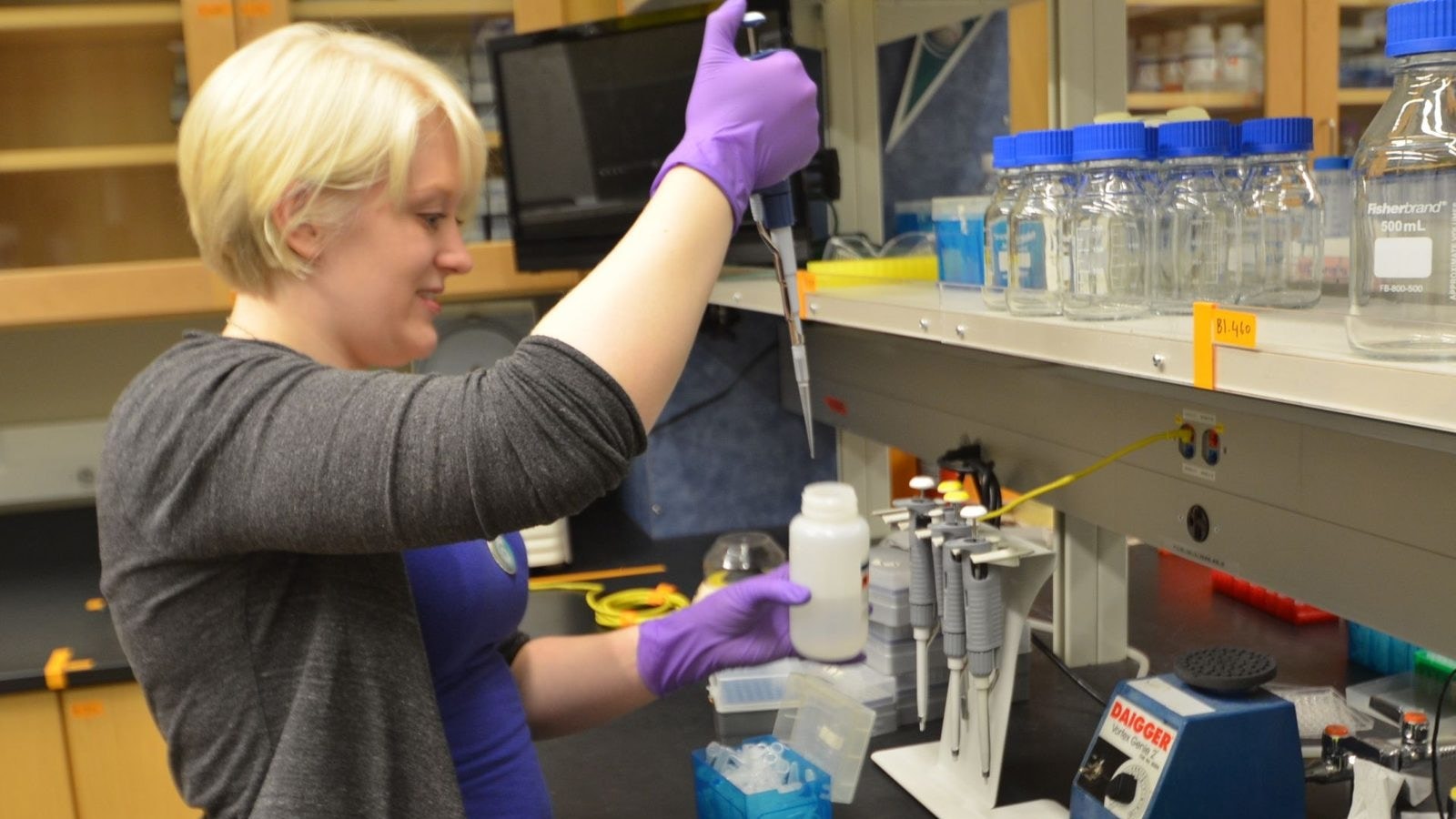
Artificial intelligence has spent most of its scientific career on the dry side of the wall. Models read papers, rank molecules, predict protein structures, generate code, search parameter spaces and suggest experiments. Then a human being, a contract laboratory or an academic collaborator has to walk across the hall and ask nature whether the machine was right.
Anthropic has now made that wall thinner. The company has established a physical biology laboratory in the San Francisco Bay Area as it expands work on AI-assisted biology and drug discovery. Reuters reported the lab on September 18, and Anthropic confirmed the facility while emphasizing that the company is not running clinical trials. That distinction matters. This is not an AI company becoming a pharmaceutical manufacturer overnight. It is an AI company acquiring a place where hypotheses can encounter cells, reagents, instruments, noise, contamination, failed assays and all the other rude facts that make physical science different from text generation.
The most important thing about a wet lab is not the wetness. It is feedback. A model can propose an experiment. The experiment can be executed. Instruments can measure the result. That result can be structured, returned to the model, compared with the prediction and used to choose the next experiment. Once those steps are integrated tightly enough, AI-for-science stops being a sequence of isolated demonstrations and begins to resemble a control loop.
The laboratory is an interface to reality
Language models are exceptionally good at operating in worlds where the environment is already digitized. Code compiles or it does not. A theorem checker accepts a proof or rejects it. A database returns records. A web service answers an API request. Biology is less polite. The relevant state of a cell may not be observable directly. Samples drift. Reagents vary. Instruments have calibration error. Protocols contain tacit knowledge. A result can be statistically real and biologically irrelevant, or biologically important and initially buried in noisy measurements.
That is why physical experimentation is not merely another tool call. It changes the epistemic structure of the system. The model cannot simply produce a plausible answer and move on. The material world can reject it.
This creates an obvious opportunity. If a model can generate ten plausible hypotheses, rank them by expected information gain, choose a small set of experiments, inspect the results and update the next round, then the laboratory becomes a search engine whose index is reality. The gain is not necessarily that each individual experiment becomes dramatically faster. The gain may come from choosing better experiments and reducing dead-end work.
There is also a second advantage that deserves more attention: proprietary experimental data. Frontier models are increasingly trained on similar public corpora. A laboratory can generate observations that competitors do not possess. If those observations are systematically tied to model reasoning, protocol choices and outcomes, the resulting dataset is not just scientific output. It is training material describing how hypotheses survive contact with the bench.
Automation is not autonomy
None of this means Claude is alone at three in the morning operating a centrifuge and wondering whether anyone remembered to order tips. A laboratory can be highly AI-assisted without being autonomous. Humans can approve protocols, prepare samples, operate equipment, inspect anomalous results and decide which classes of experiment are permitted. Robotics can automate liquid handling while people retain authority over experimental design. Software can schedule instruments without having permission to alter biological targets.
Those distinctions are going to matter more than the word “AI.” The useful questions are concrete. What can the model propose? What can it execute? Which actions require human approval? Which instruments are directly addressable? Can the system modify a protocol after observing a result? Can it order materials? Can it initiate a new experiment outside a predefined family? How are unusual outputs escalated? Who owns the stop button?
The security model therefore starts to look familiar to anyone who has worked with autonomous software agents. A laboratory is a privileged environment. Reagents, instruments, biological materials and robotic handlers are resources. Experimental protocols are executable procedures. Human approval is an authorization boundary. Instrument logs are audit records. A sample identifier is part of the chain of custody. Once AI participates in the loop, laboratory safety and agent security begin sharing vocabulary.
Drug discovery is a particularly unforgiving test
Drug discovery attracts AI companies because the search spaces are enormous and the economic reward for finding useful structure is equally enormous. It is also a domain that punishes overconfidence. A molecule can look promising computationally and fail in cells. It can work in cells and fail in animals. It can survive those stages and fail because of toxicity, metabolism, manufacturing, dosing or clinical efficacy. Every transition removes attractive ideas.
That makes the physical feedback loop valuable precisely because it destroys bad ideas early. The model does not need to be an oracle. It needs to improve the probability that scarce laboratory time is spent on experiments that discriminate among hypotheses. An AI system that becomes excellent at saying “these three experiments will tell us which of these six mechanisms is actually operating” may be more useful than one that simply generates another thousand candidate molecules.
There is a seductive version of this story in which laboratories become self-driving discovery engines. The more defensible near-term version is less cinematic and probably more important: models become increasingly competent experimental planners embedded inside institutions that already possess robotics, technicians, scientists, assay infrastructure and safety procedures. The organization becomes faster because the machine reduces the friction between evidence and the next decision.
The bottleneck moves
If reasoning becomes cheap, physical throughput becomes expensive. A model can generate experimental ideas faster than a laboratory can run them. That creates a queue. The next optimization target becomes robotic handling, instrument utilization, sample preparation, assay turnaround and the software that coordinates them.
This is the same pattern appearing elsewhere in AI. Once computation improves, networking becomes the bottleneck. Once robot actuators improve, generalizable control becomes the bottleneck. Once models can generate scientific hypotheses cheaply, the ability to interrogate physical reality becomes the bottleneck.
That inversion is important for understanding where investment and technical effort may move. Laboratory automation companies, liquid-handling platforms, machine-readable protocols, standardized metadata, instrument APIs and reproducibility tooling all become more valuable if the number of machine-generated experiments rises. The future AI laboratory may be defined as much by plumbing and scheduling as by model architecture.
There is a safety problem hiding inside the success case
A system that can efficiently design useful experiments can also efficiently explore spaces that require controls. The relevant response is not to pretend the capability is harmless, nor to leap directly from pipettes to apocalypse. It is to engineer permissions around the physical loop before autonomy expands.
Experiments should have machine-readable authorization classes. Proposed protocols should preserve provenance. Changes made after a result should be logged. Biological materials should have inventory controls. High-consequence actions should require independent human approval. Models should not be able to erase their own experimental history. The laboratory should make it possible to reconstruct not merely what happened, but why the system chose to do it.
That is ordinary safety engineering applied early enough to be useful.
Method, limits and falsification
If Anthropic's laboratory remains primarily a demonstration facility, if experiments are too slow or heterogeneous to produce useful machine-learning feedback, or if AI-generated experimental plans fail to outperform conventional workflows, the closed-loop thesis weakens. Likewise, if most useful biology continues to require tacit human judgment that cannot be captured in protocols or instrumentation, laboratory ownership may add less leverage than the software narrative suggests.
The next evidence to watch is operational rather than promotional: number of experiment classes, automation level, turnaround time, percentage of experiments materially designed by AI, human intervention rate, reproducibility across runs and whether the resulting data improves subsequent model decisions.
Anthropic's wet lab matters because it gives an AI developer a direct route from model reasoning into empirical correction. The important threshold is not “AI does biology.” It is whether the company can close a reliable loop in which a model proposes, physical systems test, instruments measure and the next decision improves. When that loop becomes fast, auditable and repeatable, AI-for-science stops being a chatbot attached to research and starts becoming part of the experimental apparatus.
Source trail
Reuters, Sept. 18, 2026 — Anthropic quietly sets up biology lab