

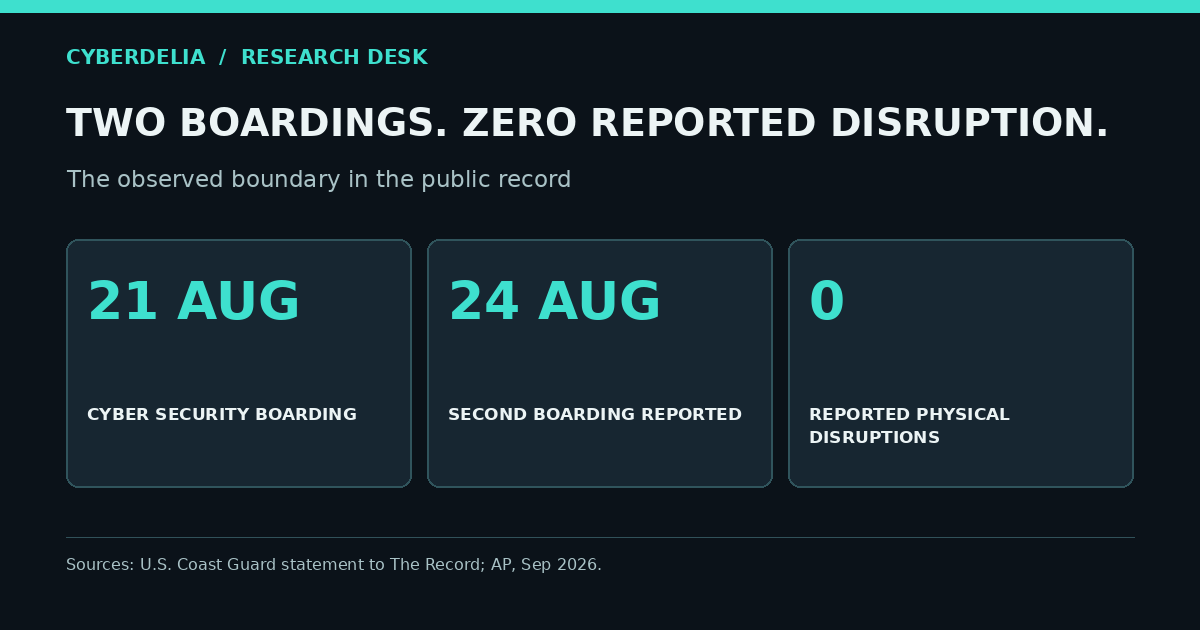
The computer was at sea, carrying oil, and the incident response team had to climb aboard it. On August 21, U.S. Coast Guard law enforcement officers, its Cyber Protection Team, a vessel inspector and FBI cyber operators boarded a tanker in the Gulf of Mexico after signs of a network compromise. The Coast Guard described the suspected intruders to reporters as foreign cyber actors. Associated Press later reported a second boarding on August 24. Investigators examined the integrity of information systems and operational technology aboard the ships.
There is a sharp line between that confirmed response and the more cinematic version of the story. Officials reported no operational disruption, vessel instability, danger to crews or environmental impact. They have not publicly identified the attacker or described the technical path into the network. A report that a tanker was investigated after a cyber compromise is serious. A claim that hackers took its helm or nearly spilled its cargo is not established by the public record.
The episode is useful precisely because the ships kept moving. Maritime cyber defense is often sold through worst-case images of a vessel running aground. Here the public facts expose the less dramatic operational problem: when a ship's systems may be untrustworthy, somebody has to determine what remains safe while the vessel, its cargo, its crew and its next port continue to exist in physical space.
One ship, several different computers
A modern tanker is not a single network with a wheel attached. Its navigation, engine monitoring, cargo systems, communications, administrative work and shore-side reporting can involve distinct equipment and trust zones. Operators and vendors may need maintenance access. Crew members use ordinary computers too. The mere presence of malware on a vessel's information network does not prove the navigation or propulsion controls were compromised. It does create a question that cannot be answered from a press release: where did the intruder actually reach, and what systems trust the affected machines?
That is why the reported boarding included a vessel inspector alongside cyber specialists. The task was not just to identify an infected laptop. It was to establish whether operational and information technology could be trusted for a safe voyage and safe port entry. If an alert is confined to a crew business workstation, the response differs from an intrusion into a maintenance path that can alter engine or cargo parameters. The public has not been given enough forensic detail to place either August case on that spectrum.
A ship also complicates ordinary enterprise incident response. A corporate office can sometimes shut off a network segment, suspend a service, evacuate staff or wait for replacement hardware. A vessel cannot always stop safely where it happens to be. Connectivity may be expensive or intermittent. Some equipment runs vendor software with long service lives. Investigators need to preserve evidence without interrupting systems that maintain power, steering, fire safety or cargo stability. A reboot that is trivial in an office can be a consequential decision offshore.
The dangerous shortcut is confusing access with control
Reports about attacks on industrial systems frequently slide from “network intrusion” to “remote control of the machinery.” That leap is exactly what an evidence-led account should resist. To establish control, investigators would need evidence about which system was accessed, what privileges the intruder had, whether commands crossed into operational technology, whether those commands could change a physical process and whether any such change occurred. The Coast Guard has not published that chain for these tankers.
The reverse shortcut is also bad. “No operational disruption reported” does not mean “no cyber risk.” It means the known event did not produce the listed physical consequences, at least according to the available statements. A network can be penetrated without an attacker finding the right control path. An intrusion can be detected early. A system can remain safe because independent controls or a crew held the boundary. All of those are materially different explanations. A post-incident report would need to distinguish them.
Attribution deserves the same discipline. “Foreign cyber actors” is how the Coast Guard characterized the indications. Other outlets have discussed possible state involvement or claims of responsibility. Neither a geopolitical motive nor an Iranian operator has been publicly established by the detailed evidence available to Cyberdelia. A tanker is an irresistible symbol in a tense region; that is precisely why the source of the intrusion should not be guessed from the route of the vessel or the politics of the week.
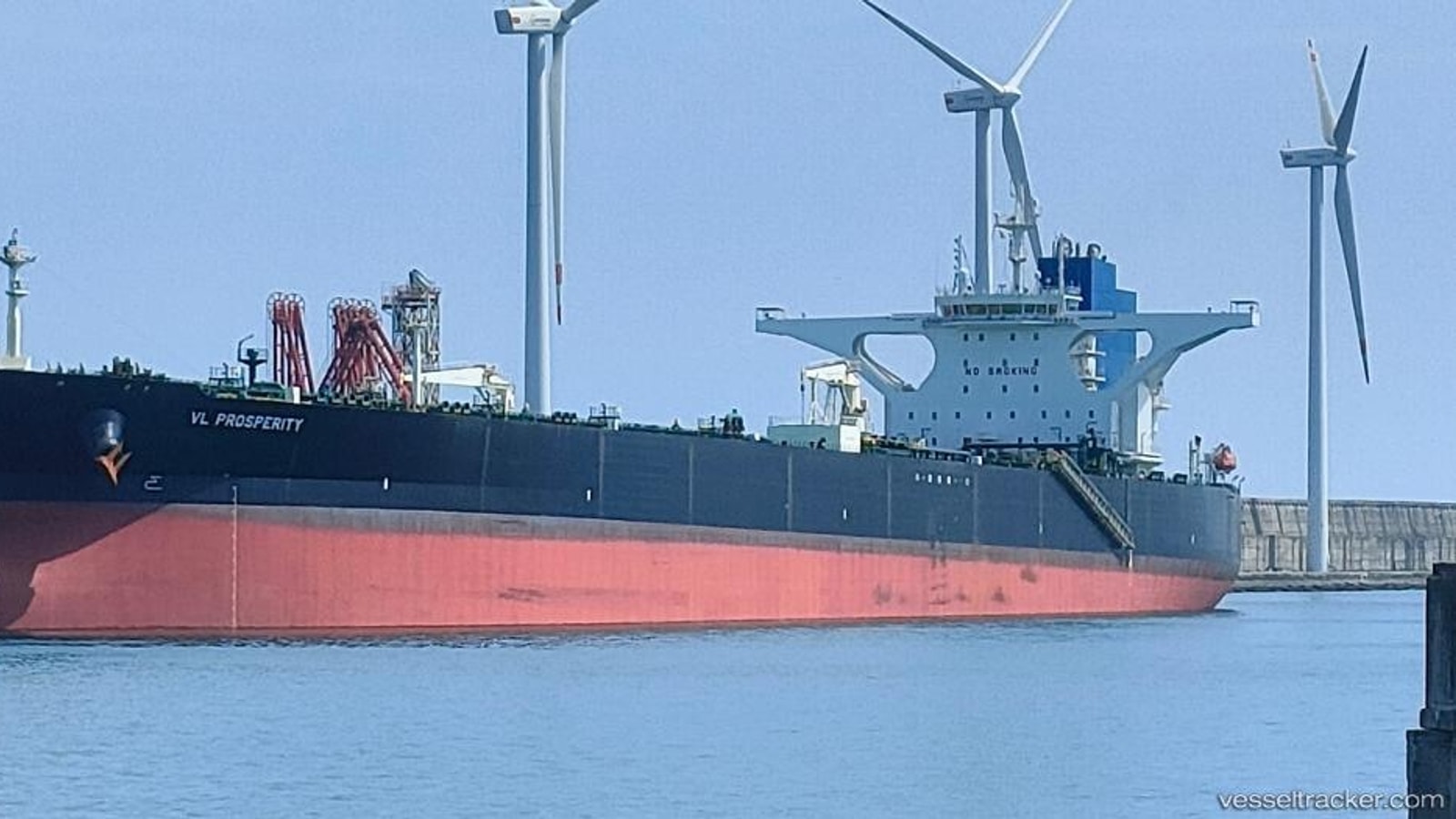
Bloomberg identified VL Prosperity as one of the affected tankers, according to The Record. The Coast Guard did not confirm to that outlet whether its August 21 boarding involved VL Prosperity. A photograph of that named vessel is therefore useful identification context, not visual evidence of the boarding or confirmation of a specific ship-to-incident match.
Why the port matters as much as the ship
The ship is one node in a chain involving owners, management companies, cargo interests, port operators, inspection authorities, vendors and insurers. A vessel that cannot show its systems are trustworthy can affect more than its own passage. Port entry, cargo transfer and scheduling all depend on people accepting records and commands from several organizations. The Coast Guard said it was working with port operators, owners and local stakeholders to keep operations safe and uninterrupted. That is a continuity decision, not just a forensic one.
It also explains why the response is physical. The incident team needs access to machines, configurations, crew accounts, logs and perhaps equipment that cannot be examined reliably from shore. The investigator is not a remote scanner hovering over a diagram. They are on the same vessel as the crew, with the consequences of a bad decision around them. In that setting the old cyber distinction between “IT problem” and “real world problem” collapses very quickly.
A response plan that can survive the voyage
Imagine a crew learning about a suspected intrusion hours before reaching port. The first impulse in an office might be to unplug everything. A ship needs a more specific decision tree: what can be isolated without degrading navigation or safety systems, which logs can be copied without changing a controller, and what independent instruments allow the crew to cross-check a suspect display? The people making those calls need a current inventory of dependencies, not a generic instruction to “disconnect the network.”
The operators ashore need a parallel plan. Who can authorize a maintenance contractor's access, which credentials work across the fleet, how quickly can shared secrets be rotated, and what evidence must be preserved from shore systems that exchange data with the ship? If the owner cannot tell which vessel talks to which vendor service, a single incident becomes a fleetwide guessing exercise. Conversely, a clean separation between administrative traffic and ship controls can make a detected intrusion far less consequential. The August response tells us that experts examined integrity; it does not show which of these protections the affected vessels had.
There is a final coordination problem at the pier. A port may need enough assurance to allow cargo work while investigators still lack a complete theory of the intrusion. That decision needs explicitly bounded claims: which systems were tested, when they were last known clean, what compensating watch is in place, and what event would suspend operations. “No disruption so far” is useful evidence, but it cannot answer whether the next command is safe. A measured continuity plan can.
The report we still need: method and limits
For now, the public record answers the first questions: there were signs of compromise, federal teams boarded, and officials reported no physical disruption. It does not tell us initial access, the affected systems, the duration of unauthorized access, whether the two incidents share an operator, whether any system was altered, or what the crew and owners had to change before the ships could proceed. These are not decorative details. They determine whether the cases teach us about failed credentials, segmentation, vendor access, detection or simple luck.
Until those facts emerge, the defensible conclusion is narrower and more useful than “hackers hijacked an oil tanker.” Cyber incident response now travels to sea. Its job is to prove which parts of a large, moving industrial system are still trustworthy before the rest of the supply chain relies on them.
Several plausible interpretations remain open. This could have been an intrusion confined to administrative systems; it could have reached a maintenance environment while safety controls prevented a physical effect; it could have been detected before the attacker crossed into operational technology. Reports of impaired communications or altered machinery have circulated elsewhere, but they conflict with the authorities' statement that no operational disruption was reported. A later forensic account may reconcile those descriptions. Until then, we should describe each claim with its source and resist combining them into a single invented sequence.
The story would change substantially if investigators documented commands sent to propulsion or cargo systems, or identified a shared compromise path between the two vessels. It would also change if the suspected foreign intrusion proved to be a false alarm or a routine malware event with no relevant shipboard access. That is why system logs, timelines and crew testimony matter more than the nationality attached to an unnamed attacker.
The boarding was the visible edge of a trust audit. The physical hazard was possible; the reported physical damage was zero. The unanswered question is how the suspected intrusions crossed, or failed to cross, from ordinary vessel networks into systems whose errors can move steel, fuel and people.
Source trail and method
Recorded Future News, September 16, 2026, including an on-record Coast Guard statement; Associated Press, September 17, 2026, reporting two August boardings. Cyberdelia's systems discussion is an analytical model, not a reconstruction of undisclosed ship logs.