

Weapons development is usually narrated as invention. A requirement appears. Engineers design a system. Factories manufacture it. Troops deploy it. War has a habit of making that sequence look luxurious.
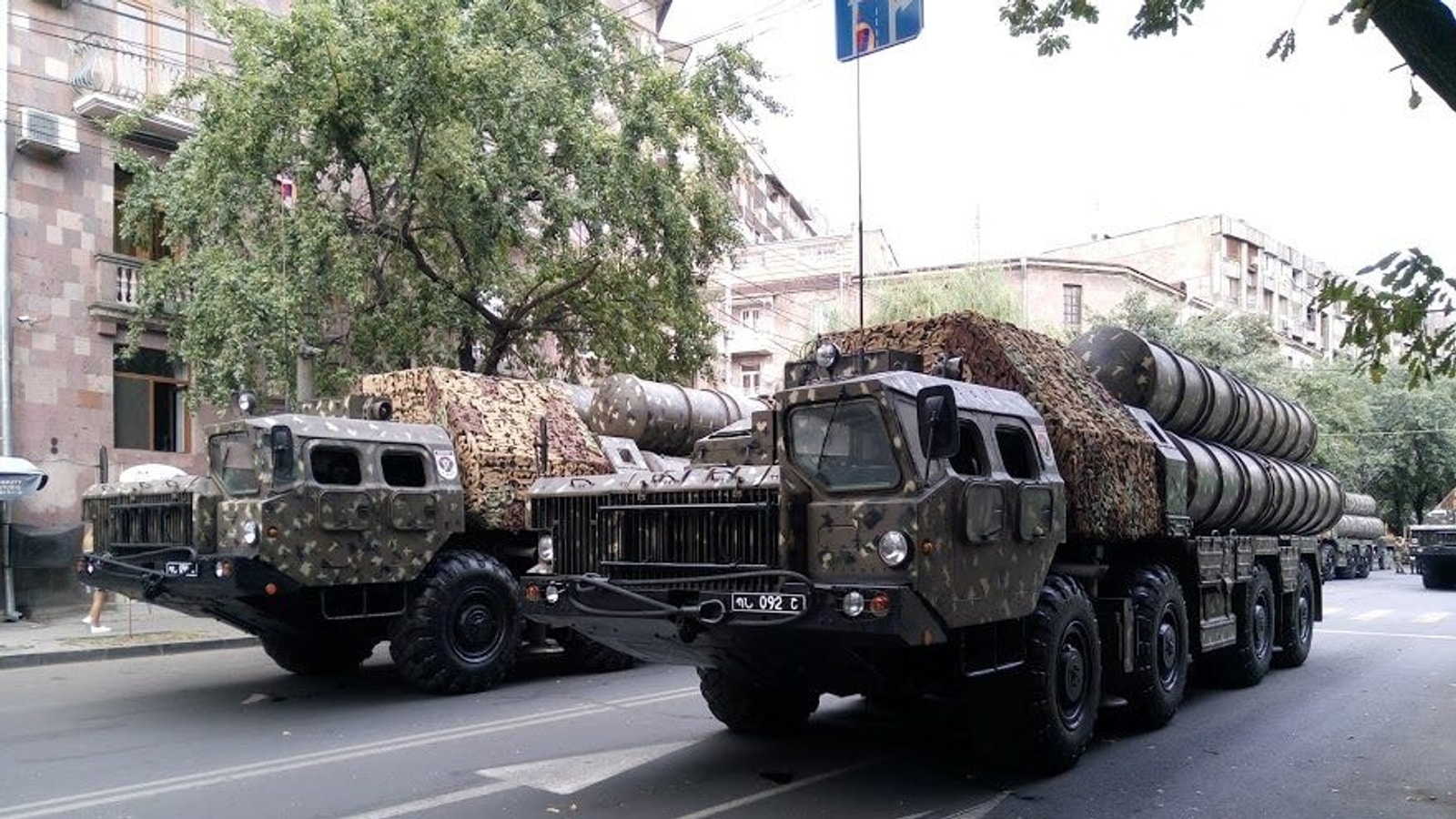
Reuters reports that Russia has adapted the RM48U, a missile associated with training for the S-300 air-defense family, for operational ballistic strikes against Ukraine. The conversion matters because it illustrates a form of military innovation that receives less attention than exotic prototypes: reuse.
A state at war does not ask only what new weapon it can build. It asks what existing motor, airframe, seeker, launcher, warhead, training round, warehouse stock or production fixture can be made useful against a different target. The fastest weapon program may be the one that begins halfway finished.
Inventory is an engineering resource
Military stockpiles contain more than ready-to-fire weapons. They contain training equipment, obsolete variants, spare parts, test articles and systems built around missions that may no longer be the highest priority. In peacetime those categories are administrative. In prolonged war they become design inputs.
The S-300 family is especially interesting because it is not a boutique weapon with a tiny industrial footprint. It is a mature Soviet and Russian air-defense lineage with launchers, support equipment, trained personnel and decades of manufacturing knowledge. A training missile associated with that ecosystem begins with advantages a clean-sheet ballistic missile does not have: the state already understands much of its propulsion, storage, handling and launch architecture.
Conversion does not make those advantages free. Guidance may need modification. Reliability requirements change when a round moves from training to combat. Warhead integration, fuzing, targeting and launch procedures matter. Accuracy may be poor compared with purpose-built weapons. But a weapon does not need to be elegant to consume an interceptor, threaten infrastructure or add another object to a saturation attack.
Cost per effect beats technical purity
The most dangerous mistake in analyzing wartime technology is to rank weapons solely by sophistication. A less accurate missile may still be strategically useful if it is abundant. A cheap drone may be useful because the defender must spend more to stop it. An old airframe may be useful because it forces radar operators to classify another track.
The relevant unit is not technological beauty. It is effect per constrained resource.
For the attacker, the constraints include motors, explosives, electronics, skilled labor, launchers and time. For the defender, they include interceptors, radar coverage, crew fatigue and uncertainty. A converted training missile can therefore create value even if its circular error probable is ugly. It joins an arithmetic problem.
Air defense makes quantity a weapon
Modern air defense is not simply a contest between one incoming missile and one interceptor. Defenders manage magazines, sensor sectors, engagement priorities and reload times. A mixed attack containing drones, cruise missiles and ballistic threats forces different systems to make decisions under time pressure.
That means an additional class of usable missile can matter beyond the damage caused by individual rounds. It can increase raid density. It can force expensive interceptors to be allocated. It can complicate identification. It can arrive alongside more accurate weapons intended for higher-value targets.
This is why industrial capacity and tactical design cannot be separated. The weapon's strategic value depends partly on how many can be fielded and how cheaply the inventory can be replenished or converted.
The lesson travels beyond Russia
Every military with deep stocks should be asking the same uncomfortable question: which “noncombat” or obsolete systems could become useful under emergency conditions?
That does not mean converting everything into a weapon. It means mapping latent capability before a crisis. Could a training drone become a decoy? Could a target aircraft become a reconnaissance platform? Could an old missile motor support a different payload? Could commercial manufacturing lines produce components for military systems without complete retooling? Could software-defined radios allow obsolete hardware to participate in a modern network?
The industrial advantage belongs partly to whoever has already answered those questions.
Conversion has limits
Reuse is not magic. Old stocks deteriorate. Propellants age. Electronics become unavailable. Training rounds may have been built to different reliability standards. A launcher fleet has finite life. Every conversion also consumes something that can no longer serve its original purpose.
There is also an opportunity cost. Engineering teams adapting old hardware are not working on something else. If conversion requires extensive rebuilding, a supposedly cheap solution can become a disguised new production program.
That is why the key unknown is throughput. A clever conversion of fifty rounds is tactically interesting. A repeatable conversion pipeline producing hundreds or thousands changes the industrial picture.
Method, limits and falsification
If RM48U stocks are small, conversions prove unreliable, accuracy is too poor to generate useful effects, or the modification process consumes scarce components needed elsewhere, the program may remain a wartime expedient rather than a meaningful new supply channel. Independent evidence about launch counts, debris identification and production cadence will matter more than claims from either belligerent.
The RM48U story is a reminder that military technology is not only invented. It is reclassified, rewired, repurposed and dragged out of warehouses. Long wars reward institutions that can look at an existing industrial ecosystem and ask what else it can do. The glamorous weapon is the new one. The dangerous weapon may be the one nobody bothered to count because it was labeled training equipment.
Source trail
Reuters, Sept. 18, 2026 — Russia adapts training missile