

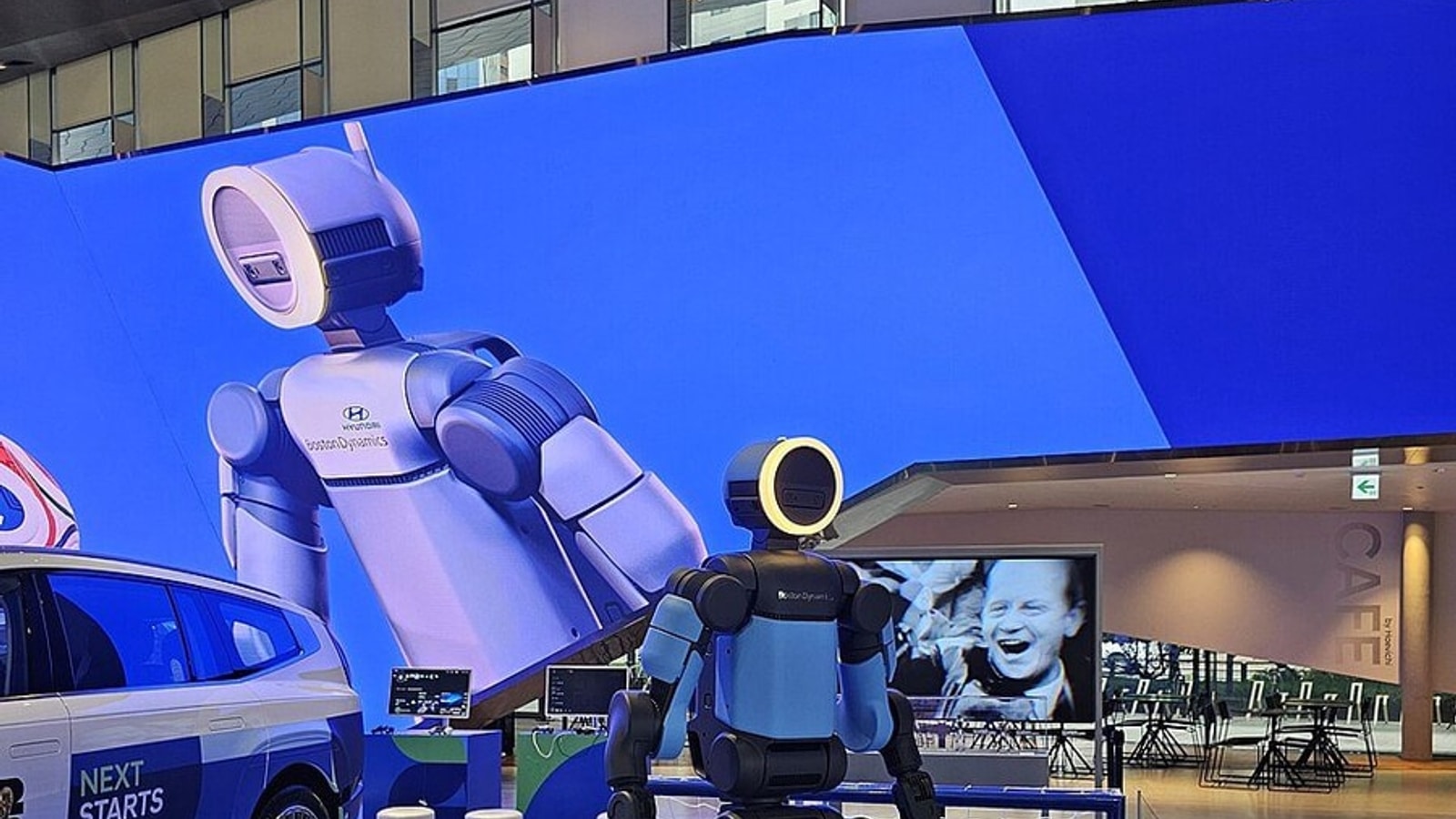
Humanoid robotics has spent years teaching machines to look alive. They stand up. They walk across uneven ground. They run. They dance. They recover from shoves. They move boxes in carefully arranged factories and wave at crowds under exhibition lights. Each improvement matters. Together they have created a strange inversion: the body is becoming convincing faster than the mind that is supposed to inhabit it.
Spirit AI founder Gu Li put a date on that tension this week, telling Reuters that humanoid “brains” could experience a ChatGPT-style breakthrough as soon as mid-2027. The date is a forecast from an interested company founder, not an engineering deadline issued by nature. The more important part is the diagnosis underneath it. Chinese humanoid companies have pushed hardware forward rapidly enough that generalizable control, manipulation and instruction following increasingly look like the harder remaining problem.
This is the point where robot demonstrations can become misleading. A machine performing one impressive routine tells us that the complete system can perform that routine. It does not tell us how much of the behavior transfers to the next room, the next object, the next floor surface or the next instruction.
Locomotion was visible, so we mistook it for the whole problem
Walking is brutally difficult, but it is also easy to recognize. A humanoid that falls down has failed in a way everyone can understand. That made locomotion a natural public benchmark. Better actuators, batteries, motor controllers, state estimation, force sensing and model-predictive control produced spectacular gains. Robots that once shuffled cautiously now sprint and recover dynamically.
But useful labor is mostly manipulation plus judgment. Pick up the right object. Notice that it is fragile. Rotate it because the opening faces the wrong way. Use enough force to hold it but not enough to crush it. Put it where the human intended rather than where the literal wording accidentally suggested. Detect when the drawer is jammed. Try a different grip. Stop when the situation becomes unsafe.
Humans solve these problems with a ridiculous amount of background knowledge accumulated through bodies. We know how cardboard bends, how glass breaks, how fabric catches, how a half-full bottle changes balance and how an object hidden behind another object might still be reachable. A robot needs some computational substitute for that lifetime of physical intuition.
Training data is becoming robotics' industrial raw material
That is why humanoid companies are building teleoperation programs and data factories. Human operators perform tasks while robots record joint states, camera feeds, forces, trajectories and outcomes. The resulting demonstrations can train policies that map perception and instructions into action.
This approach has an obvious attraction: the robot learns from successful behavior rather than requiring engineers to write every rule. It also creates an uncomfortable scaling problem. The internet provided language models with enormous quantities of human-produced text and imagery. There is no equivalent internet of high-quality robot trajectories waiting to be downloaded.
Someone has to create it.
Spirit AI says roughly a thousand people are involved in collecting real-world training data. Across the industry, that kind of labor is becoming part of the hidden infrastructure of embodied AI. The robot may look autonomous during the demonstration, but somewhere upstream there may be months of human demonstration, labeling, simulation and failure analysis.
The breakthrough has to be measured differently
If 2027 is going to contain a genuine “robot brain” breakthrough, it cannot simply mean a better choreographed demo. Cyberdelia would look for five things.
First, task transfer. Teach the robot to load one dishwasher and then put it in an unfamiliar kitchen with a different machine. Second, object generalization. Give it tools, containers and packages it has never seen. Third, recovery. Deliberately move an object, jam a drawer, change lighting or interrupt the task and see whether the machine repairs its plan. Fourth, instruction compression. Measure how much human explanation is required before useful work begins. Fifth, long-horizon reliability. Ten successful minutes are not an eight-hour shift.
Those tests would make robot intelligence much harder to fake with preparation. They would also make progress more meaningful.
Robot fighting is a useful stress laboratory
Combat robotics sounds like entertainment, but adversarial environments expose exactly the weaknesses that polished factory demonstrations conceal. An opponent does not cooperate with the training distribution. Contact is unpredictable. Sensors get occluded. Balance is disturbed. Actuators saturate. Plans fail halfway through execution.
That makes robot fighting potentially valuable as a benchmark for embodied intelligence if the sport is designed carefully. The interesting metric is not simply which machine hits hardest. It is whether a robot can perceive an adversary, protect itself, manage energy, recover from unexpected contact, alter tactics and continue operating after its initial plan stops working.
In other words, adversarial robotics tests the difference between a routine and a behavior.
The body still matters
Calling intelligence the new bottleneck does not make hardware solved. Humanoid actuators still face thermal limits, wear, impact loading, efficiency and cost. Hands remain difficult. Batteries constrain operating time. Sensors fail in glare, darkness, dust and clutter. Production tolerances turn identical software into slightly different machines.
More importantly, intelligence and embodiment cannot be separated cleanly. A policy trained on one actuator response may fail when friction changes. Better tactile sensing can reduce the amount of inference the model must perform. A compliant gripper can turn a difficult precision-control problem into an easier mechanical one. Good morphology is computation outsourced to physics.
The likely path is therefore co-design. Better models permit simpler programming. Better hardware makes the learning problem easier. More deployment generates more data. More data improves policies. Better policies justify larger fleets, which generate still more data.
Factories will probably arrive before homes
The home remains the final boss of robotics because humans have filled houses with irregular objects, narrow spaces, pets, children, liquids, clutter, stairs and fragile things while maintaining almost no machine-readable documentation. A factory can standardize the floor, fixtures, lighting and workflow. A home standardizes nothing except the homeowner's conviction that the robot should somehow know where the scissors went.
That is why industrial deployment is likely to provide the strongest evidence first. If humanoids can perform useful work in semi-structured factories with falling intervention rates and rising task diversity, the data will matter more than any stage performance.
Method, limits and falsification
If hardware costs remain too high, if actuators cannot survive industrial duty cycles, if teleoperation data fails to transfer across machines, or if learned policies remain brittle outside tightly controlled scenes, then “the brain is the bottleneck” will have been premature. It may turn out that embodied intelligence requires much more hardware-specific learning than language-model analogies imply.
The scoreboard should therefore remain physical: intervention hours per operating hour, unfamiliar-task success, recovery rate, useful payload, energy per task, maintenance hours and cost per productive hour.
The humanoid industry is entering a more interesting phase because visible athleticism is no longer enough. The next credible breakthrough will be a machine that can receive an unfamiliar instruction, understand a messy physical scene, manipulate unfamiliar objects, notice when its plan fails and recover without a human puppeteer. We have spent years building the body. Now the industry has to prove there is an animal in it.
Source trail
Reuters, Sept. 18, 2026 — Spirit AI on robot-brain development