

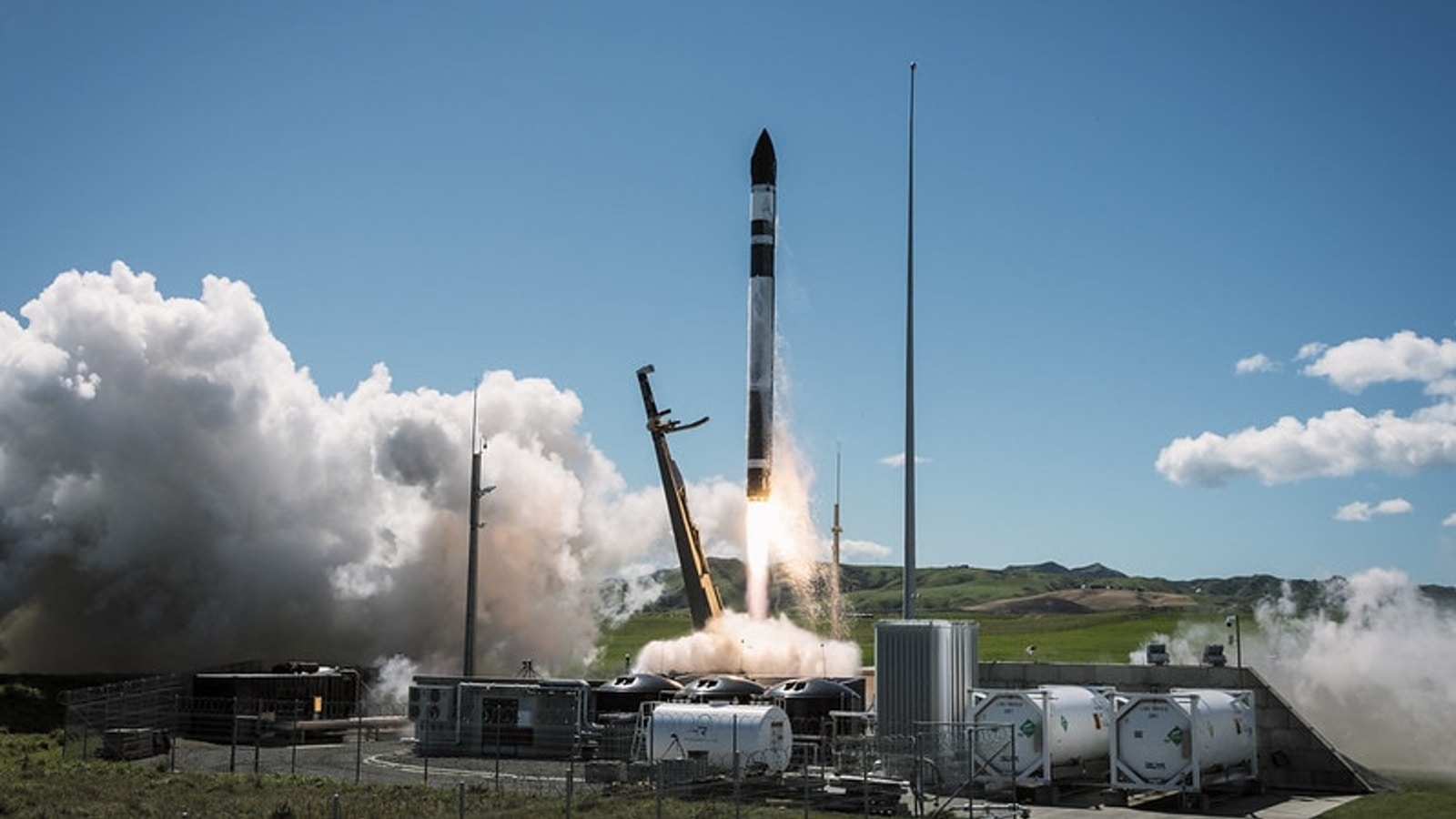
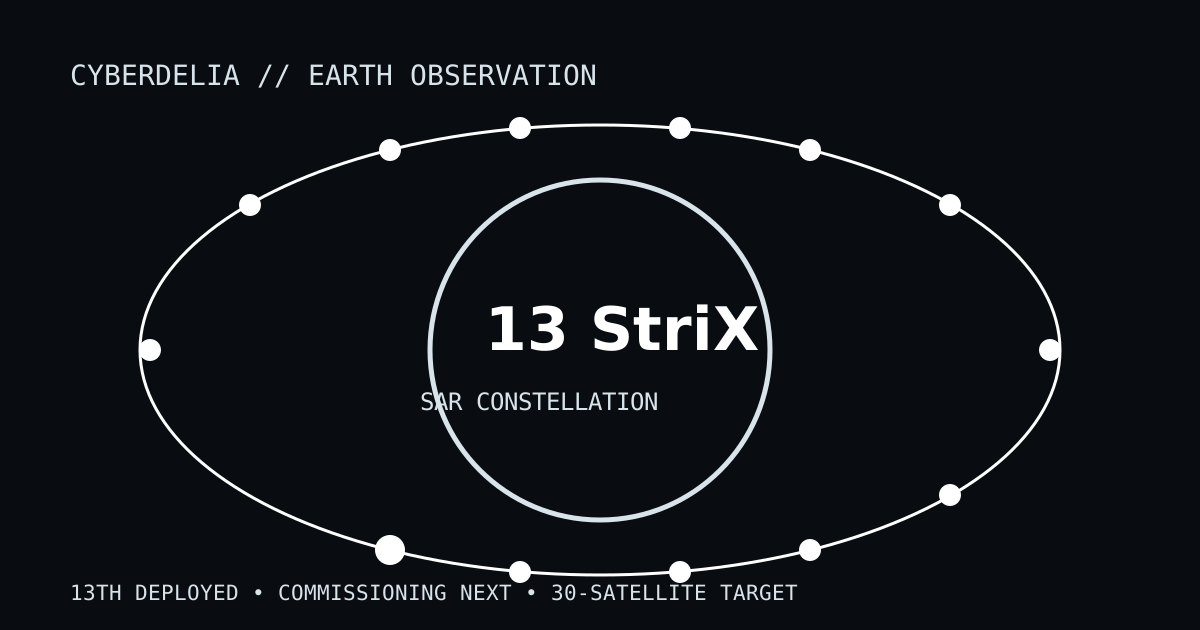
Rocket Lab's Electron lifted a thirteenth StriX radar satellite for Synspective from New Zealand on September 26 and delivered it to a 559-kilometer low-Earth orbit. Synspective subsequently reported that the spacecraft had established communications and was controllable. That is a successful launch and early spacecraft checkout. It is not yet a successful imaging mission.
The distinction matters more as satellite companies move from proving individual spacecraft to operating constellations. Synspective says it will spend the coming months testing and commissioning the new satellite before it enters service. During that period, engineers have to turn a deployed machine into a dependable sensor: verify the antenna and spacecraft systems, calibrate radar performance, characterize data products and integrate scheduling and downlink into an existing fleet.
SAR does not need daylight
StriX uses synthetic aperture radar rather than a conventional optical camera. Its X-band radar transmits microwave energy toward Earth and measures the returned signal. Because the spacecraft supplies its own illumination, useful observations do not depend on sunlight, and radar can operate through cloud conditions that can block optical imagery. Those properties make SAR particularly valuable when the event worth observing is a flood, storm, earthquake or infrastructure change that refuses to wait for a clear afternoon.
The "synthetic aperture" comes from combining measurements collected as the spacecraft moves along its orbit, allowing signal processing to obtain resolution associated with an antenna aperture much larger than the physical antenna alone would suggest. Synspective's published specifications describe several trade spaces. Stripmap covers a larger area at coarser resolution. Sliding and staring spotlight modes spend more observation geometry on a smaller area to increase detail. Current company specifications include sub-meter modes, with exact performance dependent on mode and observation conditions.
Those are product specifications for the StriX system, not measurements from satellite thirteen. A new spacecraft still has to demonstrate that its radar, antenna deployment, timing, attitude knowledge and processing chain produce data within the required tolerances.
The constellation changes the product
One excellent Earth-observation satellite is constrained by orbital mechanics. It can image only the places that fall within its accessible geometry at a given time. Add satellites in useful orbital planes and the product begins to change. Customers can request observations more frequently, compare the same location across shorter intervals and reduce the time between an event and a usable collection opportunity.
Synspective says its long-term target is 30 SAR satellites. Its own constellation material emphasizes revisit frequency, latency and time-series change detection rather than treating raw image resolution as the only metric. That is the correct systems view. A half-meter image arriving after a decision is over may be less useful than a slightly coarser image delivered during the decision window.
The orbit selected for this launch also matters. Rocket Lab reported a 559-kilometer target. Synspective operates StriX spacecraft across sun-synchronous and inclined orbits, using different geometry to improve access to areas of interest. A constellation is therefore not merely a pile of identical satellites at the same altitude. Its coverage depends on orbital planes, inclination, look direction, tasking conflicts, downlink capacity and how much time each spacecraft can spend collecting data.
Launch cadence becomes infrastructure
The September 26 flight was Rocket Lab's 97th Electron mission and its eighteenth launch of 2026, according to the company. It was also the thirteenth StriX delivered by Electron. Rocket Lab says another fourteen dedicated missions are scheduled for Synspective through the end of the decade.
Repeated dedicated launches give a constellation operator something different from a single spectacular mission: a production rhythm. A failed spacecraft, delayed component or changing orbital requirement can be handled inside a continuing campaign rather than as a once-in-a-decade event. That rhythm can shorten the time between building a satellite and learning from it in orbit.
But launch count can become a vanity metric just as easily as rocket size. What matters after deployment is useful service. Synspective's thirteenth spacecraft has reached the stage where launch marketing stops and operations engineering begins. Its radar has to be commissioned. Data quality has to be verified. Customers have to receive observations on useful schedules. The constellation has to produce better temporal coverage rather than simply a larger number in a press release.
The next evidence is data
Synspective has already published imagery from earlier StriX spacecraft, including modes designed for infrastructure and change monitoring. That gives the platform genuine operational context. It does not establish the performance of this newly launched unit.
The next meaningful evidence will be first-light imagery, calibration results and operational integration. Later, the stronger metric will be fleet behavior: how quickly a requested location can be revisited, how reliably observations are delivered and how the network performs when satellites or ground systems are unavailable.
Thirteen is therefore a milestone rather than a conclusion. The launch proved Electron could put another StriX where the customer wanted it and early communications indicate a functioning spacecraft. The harder promise is the one a constellation makes after the rocket leaves: see the same changing world often enough that the difference between two radar images becomes actionable information.
Launch and early control of StriX 13 are established. Operational radar performance and its actual improvement to fleet revisit time remain to be demonstrated during commissioning and service.